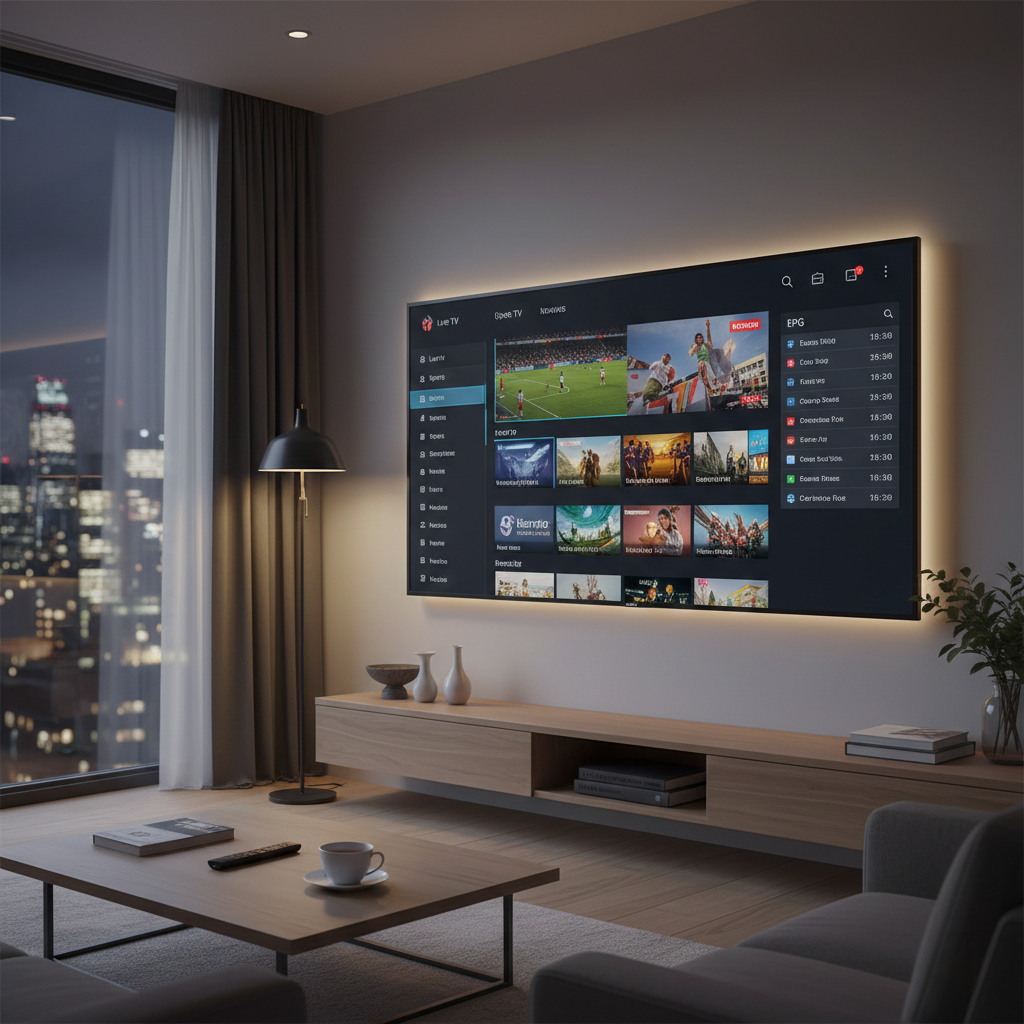
What UK users really mean by “best IPTV UK”
When people in the United Kingdom search for the “best” IPTV option, they’re usually not looking for the biggest channel list or the cheapest deal. They’re trying to find something that simply works every day: stable streams in the evening, clear HD quality on modern devices, and a setup that doesn’t feel like a technical project. For most non-technical users, “best” really means reliable, easy, and predictable — especially when watching live sports, UK entertainment channels, or family viewing across multiple rooms.
If you’re looking for a reliable IPTV Subscription UK, consider a service that delivers HD quality, consistent performance, and a simple setup.
In real life, this often looks like a common scenario: someone buys a low-cost IPTV sub, it works for a few days, then starts buffering heavily during peak hours (7–10pm). Or the channel list is huge, but half the streams are duplicated, mislabeled, or constantly changing. A genuinely premium IPTV service in the UK tends to be the opposite: fewer gimmicks, better organisation, consistent quality, and support that answers quickly when something goes wrong. That’s why many UK users value an accurate EPG, stable live TV categories, and smooth playback more than “20,000 channels” claims.
Another part of “best” is device comfort. Most people now watch IPTV in the UK on Fire TV devices, Smart TVs, Android TV boxes, and phones — often switching between them. A good IPTVuk experience is one where the service feels the same across devices: fast loading, clear channel sorting, and no constant re-login issues. It also means the service works well with modern IPTV apps that UK viewers actually use, such as IPTV Smarters-style players or similar interfaces, without requiring weird settings. If the service is designed for normal users, it should be simple enough that you can set it up once and forget about it.
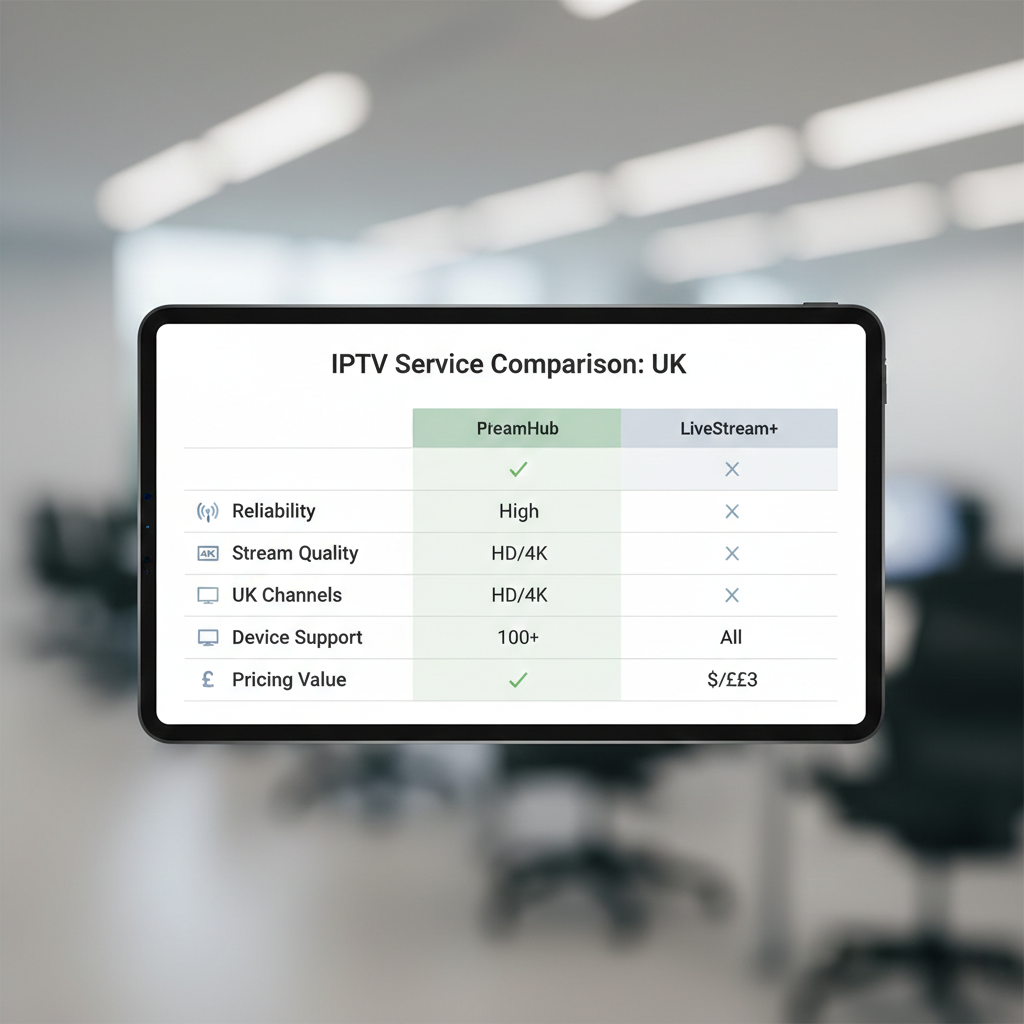
A practical way to define “best” is to focus on a few decision points before you buy. Think less about hype, and more about proof: does it stay stable at peak time, is the picture quality consistent, and does it feel like a long-term service rather than a temporary link? The comparison table above is useful here because it helps you judge IPTV services based on what matters day-to-day, not marketing.
Quick checklist (what “best” usually means in practice):
- Stable streams during peak UK evening hours
- Clear HD quality with consistent audio/video
- Works smoothly on Fire Stick, Smart TV, and mobile
- Simple channel layout + usable EPG
IPTV in the UK vs traditional TV and streaming apps
IPTV sits in the middle between traditional TV and modern streaming apps — and that’s exactly why it appeals to UK viewers. Traditional TV (Freeview, satellite, cable) is simple and stable, but it’s often limited in channel choice and flexibility. Streaming apps like Netflix, Disney+, and Prime Video are excellent for on-demand content, but they don’t replace the live TV experience many people still want for sports, news, and UK entertainment. IPTV in the UK is popular because it combines live channels with the convenience people now expect: app-based viewing, multi-device access, and extra features like catch-up and VOD.
The biggest difference is how you access the content. Traditional TV is tied to a fixed service and hardware setup: a satellite dish, a TV aerial, or a set-top box. Streaming apps are tied to individual platforms and subscriptions, so you end up juggling multiple logins and monthly payments. IPTV services, by comparison, usually run through one app on a Fire Stick, Smart TV, Android TV box, or phone. For many users, that “one place for everything” experience is the main reason they switch — especially if they want live channels plus a large VOD library without paying for five separate streaming platforms.
A practical example: a family might keep Freeview for basic channels, pay for Sky Sports, and still have Netflix and Disney+ for films. That setup can easily become expensive and still feel fragmented. With a good British IPTV service, the appeal is that you can have live TV, sports, and on-demand content in a single interface. The trade-off is that IPTV quality depends heavily on the provider’s reliability and your home broadband. That’s why a premium IPTV option matters: stable streams during peak hours and a well-organised channel list make the difference between a smooth experience and constant frustration.
If you’re deciding between IPTV and traditional services, focus on what you actually watch. If you mostly watch live sports and news, IPTV can be a strong fit — but only if the service has consistent performance and proper support. If you mainly watch series and films, mainstream streaming apps may already cover your needs. The comparison chart above helps you judge the key differences quickly, but the simplest rule is this: traditional TV wins for simplicity, streaming apps win for originals, and IPTV wins for flexible live viewing across devices.
Quick takeaway:
IPTV works best when you want live channels + VOD in one app across devices.
Traditional TV is stable but less flexible and often pricier for premium channels.
Streaming apps are great for on-demand, but don’t replace live TV for many viewers.
What a premium IPTV subscription UK viewers expect
A premium IPTV subscription UK viewers expect is one that feels like a real product, not a temporary workaround. In practical terms, that means stable live streams, clear HD quality, and a service that stays consistent week after week — especially during peak evening hours and major sports events. UK users are generally not impressed by huge channel numbers if the streams freeze, the categories are messy, or the service disappears after a month. “Premium” is less about hype and more about trust: you should feel confident that it will work when you sit down to watch.
The first expectation is reliability. A premium IPTV service should load channels quickly, hold a steady stream without constant buffering, and keep quality consistent across different times of day. Many people in the UK use Fire Stick, Android TV, or Smart TVs, so the experience should be smooth on those devices without complicated settings. The channel list should also be properly organised, with correct UK categories and an EPG that actually matches what’s on. For everyday viewing, these details matter more than any marketing claim.
The second expectation is usability and support. A premium IPTVuk setup should be simple: clear login details, straightforward instructions, and compatibility with the IPTV apps people actually use. It should also feel safe to purchase, with a payment process that doesn’t raise obvious red flags. Support is a big separator here. If something breaks, users want fast answers — not silence, not vague replies, and not constant “try another link” messages. A premium service behaves like a provider that expects long-term customers, not quick one-time payments.
Finally, UK viewers expect value, not just low pricing. The best uk iptv options are usually not the cheapest, because stable servers, quality streams, and responsive support cost money to run. The smarter way to judge value is to compare what you get day-to-day: consistent live channels, usable VOD, stable playback, and a service that works across the household. The comparison table above helps you evaluate these features quickly, but the simplest test is this: if you’d recommend it to a friend who isn’t technical, it’s probably closer to “premium” than most.
Quick takeaway:
Good support and stable peak-time streams are the real differentiators.
Premium means reliability first, not the biggest channel count.
A usable EPG + clean UK channel layout matters more than people expect.
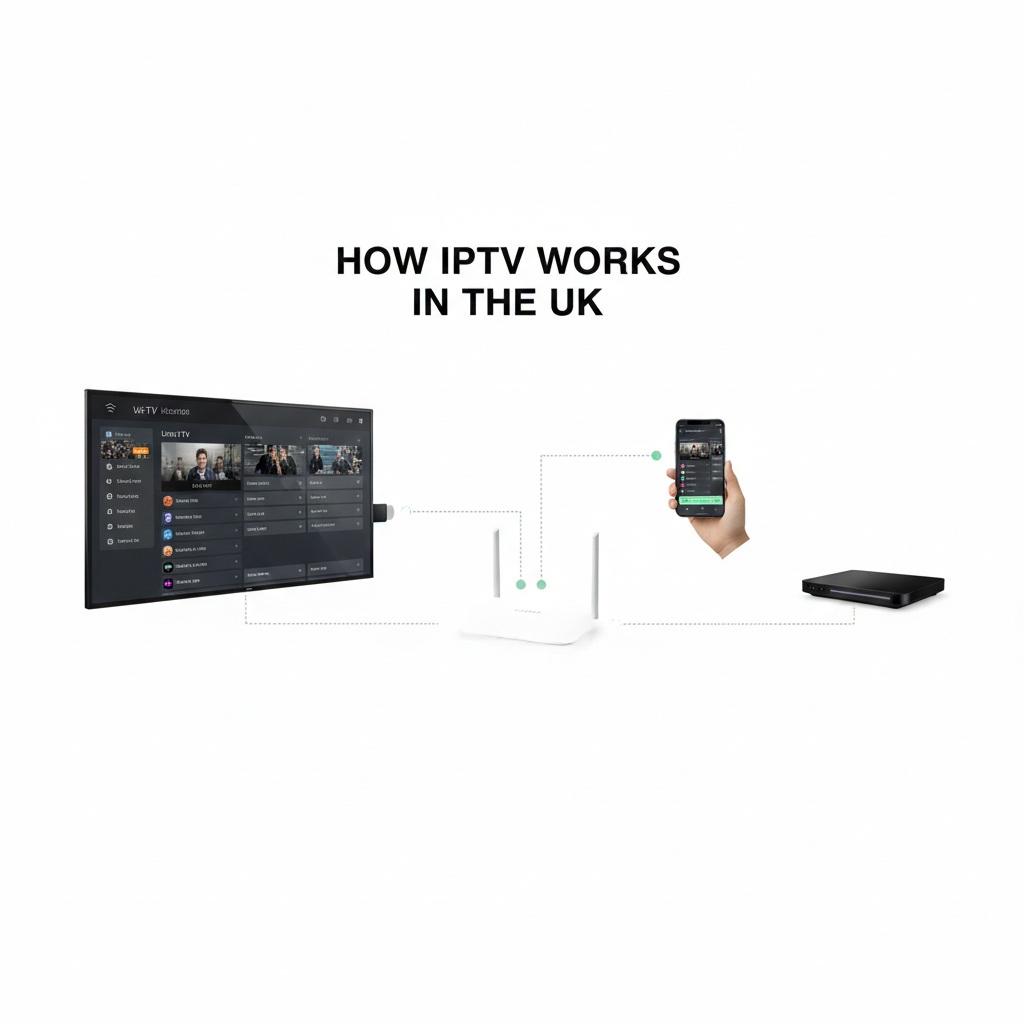
Is IPTV legal in the UK?
IPTV itself is legal in the UK — but the legality depends entirely on how the content is licensed and distributed. The technology simply delivers television over an internet connection instead of through satellite or aerial. What makes the difference is whether the provider has the legal rights to stream the channels and on-demand content it offers. In other words, IPTV as a system is neutral; the legality comes down to the source of the streams.
This is where many people get confused. There are fully legitimate IPTV services operating in the United Kingdom that hold proper agreements with broadcasters and rights holders. At the same time, there are unlicensed IPTV services that stream premium sports, films, and TV channels without permission. The visual difference between the two is not always obvious, especially when both use similar apps and interfaces on Fire Stick, Android TV, or Smart TVs. That’s why understanding the licensing side matters more than the app itself.
A common real-world scenario: a user sees an offer promising every premium sports channel, pay-per-view events, and international packages at an unusually low monthly price. That doesn’t automatically mean it’s illegal, but it should raise questions. Ask yourself: does the provider clearly explain who they are, how long they’ve operated, and what the subscription includes? Is there transparent contact information and proper support? Reliable IPTV services tend to present themselves like structured businesses, not anonymous sellers in social media messages.
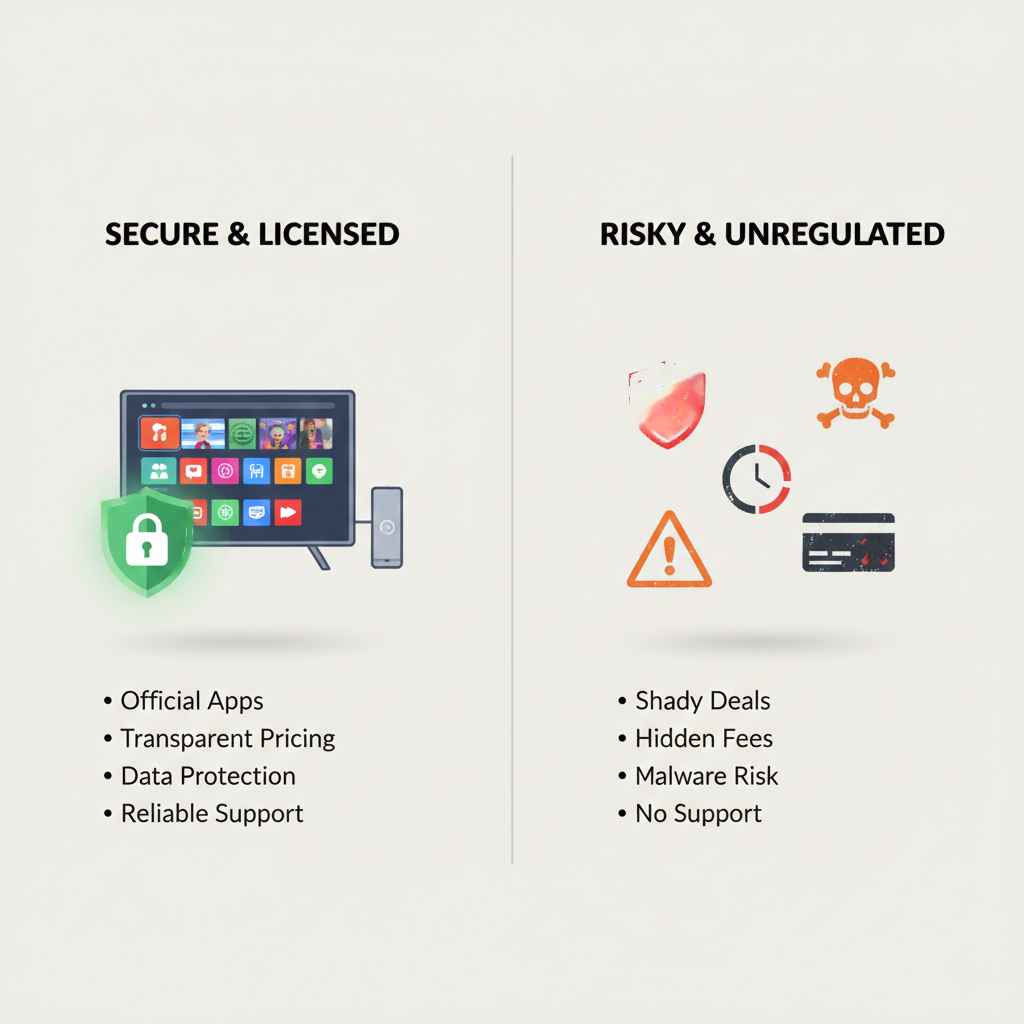
If you’re unsure, focus on red flags rather than marketing claims. Warning signs can include: constant domain changes, no visible company information, payment methods that feel unsafe, or services that disappear overnight. The legal risk is usually higher for providers than for viewers, but users still face practical risks such as service shutdowns, data exposure, or losing access without notice. The comparison visual above highlights the difference between licensed-style setups and risky offers — it’s a helpful mental checklist when deciding whether to start an IPTV subscription UK viewers can rely on.
Quick takeaway:
- IPTV technology is legal; unlicensed content distribution is not.
- Transparency and clear provider information matter.
- If the deal looks unrealistic, investigate before paying.
The difference between IPTV technology and content rights
The simplest way to understand IPTV is this: IPTV is just the delivery method, while content rights are the legal permission to stream what you’re watching. IPTV technology works like a pipeline — it sends live TV channels and on-demand video over the internet to your device, usually through an app on Fire Stick, Smart TV, Android TV, or mobile. That part is neutral and widely used, including by fully legitimate platforms. The legal question starts when a provider streams channels, films, or sports they do not have the rights to distribute.
A useful comparison is to think of IPTV like a car. Owning a car is legal, and driving it is normal. But what you do with it can be legal or illegal depending on the situation. In the same way, IPTV services can be operated legally if they have licensing agreements with broadcasters and rights holders. Without those agreements, a service might still look “professional” on the surface — it may have an EPG, a modern interface, and thousands of channels — but the streams can still be unlicensed.
This matters because many UK users assume the app determines legality. It doesn’t. Apps like IPTV players are usually just media players: they display streams you provide, similar to how a web browser displays websites. That’s why you can see the same type of interface used for completely different services. A provider offering “every premium sports channel in one IPTV sub” for an unusually low price is often relying on content they don’t legally control. For viewers, this creates practical risk: services can disappear, streams can break during major events, and your payment or personal data may not be handled safely.
If you want to judge a provider more intelligently, look for signs of transparency rather than technical features. Ask: does the service clearly explain what it offers and how support works? Does it behave like a long-term business? Does it avoid unrealistic claims? Premium IPTV providers usually focus on reliability, stable UK categories, and consistent quality instead of shouting about unlimited content. The comparison visual above is designed to help you separate “technology that looks good” from “rights and business practices that make a service trustworthy.”
Quick takeaway:
- IPTV is the delivery method; content rights decide legality.
- The app interface does not prove whether a service is licensed.
- Transparency and realistic offers are often the best indicators.
Red flags to avoid when choosing IPTV services
The biggest red flags when choosing IPTV services are unrealistic promises, zero transparency, and unstable performance. Many UK users are attracted by extremely low prices and huge channel counts, but those two factors often signal risk rather than value. A reliable service should feel structured and consistent, not rushed or anonymous. If a provider hides basic information or avoids clear answers, that alone is reason to pause.
One common warning sign is “too much for too little.” If an IPTV sub claims to offer every premium sports package, all international channels, and massive VOD libraries for a fraction of normal market pricing, ask how that’s sustainable. While pricing varies, infrastructure, servers, bandwidth, and support all cost money. Services that undercut the market dramatically often struggle with buffering, downtime during peak UK evening hours, or sudden shutdowns. If you rely on live football or pay-per-view events, instability at the wrong moment quickly turns a cheap deal into a frustrating experience.
Another red flag is poor communication and unclear setup instructions. With modern viewing habits centred around Fire Stick, Smart TVs, and Android TV boxes, a professional provider should offer clear guidance and compatible formats. If the instructions are vague, constantly changing, or depend on private messaging apps with disappearing contacts, that’s a risk. The same applies to support. If messages go unanswered for days or responses are generic copy-paste replies, that suggests the service is not built for long-term users. As highlighted in the comparison visual above, transparency and structured support are strong indicators of a more stable operation.
Finally, watch for technical and organisational chaos. Duplicate channels, broken EPG data, constantly renamed categories, and frequent link replacements are signs that the backend is unstable. A premium IPTV experience should feel organised and predictable. Before paying, test responsiveness, read independent feedback carefully, and avoid committing to very long plans immediately. In the UK market, steady performance and consistent structure matter more than exaggerated claims.
Quick checklist before choosing:
- Clear website and contact details
- Stable performance during peak hours
- Structured channel layout with working EPG
- Responsive and professional support
How to choose the best UK IPTV service
Choosing the best UK IPTV service comes down to three things: reliability, usability, and long-term value. It’s not about who lists the most channels or advertises the lowest monthly cost. It’s about whether the service performs consistently during peak UK viewing hours, works smoothly on your devices, and feels stable enough to rely on week after week. If you focus on these fundamentals first, you immediately filter out most weak options.
Start with performance. Ask how the service behaves in the evening when UK traffic is highest. Buffering during live sports or popular shows is one of the main complaints with lower-quality IPTV services. Look for consistent HD streams, minimal channel downtime, and properly working EPG data. A well-managed service should not require you to switch links constantly or refresh playlists every few days. If possible, begin with a shorter IPTV sub before committing long term, so you can test real-world performance rather than trusting promises.
Next, consider device compatibility and ease of use. Most viewers now use Fire Stick, Android TV, Smart TVs, or mobile devices. The service should integrate easily with widely used IPTV apps and provide clear setup guidance. You should not need technical knowledge beyond entering login details. A premium IPTV experience feels straightforward: channels are grouped logically (UK, sports, entertainment), search works properly, and switching between live TV and VOD is smooth. If it feels confusing from day one, it probably won’t improve later.
Finally, evaluate value instead of price alone. The best uk iptv option for you is the one that balances cost with stability and support. Reliable customer support, transparent terms, and consistent updates often matter more than saving a few pounds per month. The comparison framework above helps you assess services logically rather than emotionally. In short, choose the provider you would confidently recommend to a friend who simply wants everything to work without constant troubleshooting.
Quick decision checklist:
Responsive, transparent support
Stable peak-time streaming
Clean UK channel categories + working EPG
Easy setup on Fire Stick or Smart TV
Reliability, stream quality, and UK channel coverage
Reliability, stream quality, and proper UK channel coverage are the three pillars of a strong IPTV experience. Without stable performance, even the largest channel list becomes useless. For most viewers in the United Kingdom, reliability means one simple thing: when you turn on the TV at 8pm to watch live sport or a popular show, it just works. No endless buffering circles, no sudden disconnects, and no scrambling to find a backup link minutes before kick-off.
Stream quality is more than just “HD” written in a channel title. A dependable IPTV service should deliver consistent resolution, stable bitrates, and synchronised audio. Many users now watch on larger 4K televisions through Fire Stick or Android TV, which makes compression issues and low-quality feeds more obvious. A stream that constantly drops from clear HD to blurry resolution during busy hours is usually a sign of overloaded servers. Premium IPTV providers invest in infrastructure to handle peak demand, especially during major UK sporting events and high-traffic evenings.
UK channel coverage is equally important — and it’s not just about quantity. A well-organised British IPTV setup should offer clear categories for entertainment, sports, news, kids, and regional channels. The EPG should match the actual broadcast schedule, making it easy to browse what’s on. Poorly structured IPTV services often have duplicated channels, missing programme data, or mislabeled streams, which creates confusion. When evaluating coverage, check whether the service focuses on delivering stable versions of core UK channels rather than inflating the list with unreliable international feeds.
If you’re comparing providers, test them under realistic conditions. Watch live content during peak evening hours, switch between channels quickly, and check how long streams take to load. Ask yourself: does it feel smooth and predictable? The comparison overview above helps break down these factors clearly, but in practice, the best UK IPTV choice is the one that combines steady performance with organised, accurate UK coverage. A smaller, well-managed list is usually better than a chaotic, oversized one.
Quick checklist for evaluation:
Fast channel switching on common devices
Stable playback during peak UK hours
Consistent HD quality without frequent drops
Accurate EPG and properly grouped UK channels
Device compatibility (Fire Stick, Smart TV, mobile)
Device compatibility is one of the quickest ways to separate a premium IPTV service from a frustrating one. Most UK viewers don’t want a complicated setup — they want to watch live TV on the biggest screen at home, and then continue on mobile when they’re travelling or in another room. A strong IPTV service should work smoothly across Fire Stick, Smart TVs, and phones without needing different subscriptions, constant re-logins, or technical troubleshooting.
For many households, Fire Stick is the most reliable option. It’s affordable, fast, and works well with popular IPTV apps. This matters because even a good IPTV subscription can feel slow or unstable on an older Smart TV. A Fire Stick often solves that problem by giving you a newer, smoother interface and better app support. If you want the easiest setup, Fire Stick plus a well-supported IPTV service is usually the safest combination. A premium provider should also give clear instructions for this device, since it’s one of the most common choices in the UK.
Smart TV compatibility is where many IPTV services fail. Some TVs support IPTV apps well, while others have limited app stores, weak processors, or outdated software. That’s why many users start on a Smart TV, get frustrated with lag or app crashes, and then switch to an external device. If a provider claims “works on all Smart TVs” but doesn’t explain which apps or setup methods they support, treat that as a warning sign. Premium IPTV services usually guide users toward the most stable options rather than pretending every TV model will perform equally.
Mobile compatibility is now essential, not optional. People in the UK often use IPTV on iPhone or Android for quick viewing, especially for sports, news, or kids’ content while away from the main TV. A good IPTV service should handle mobile playback smoothly, with stable streams and sensible quality settings for Wi-Fi and mobile data. If you plan to use IPTV across multiple devices, confirm the device limit before you buy — this is where many IPTV services are unclear. A premium service makes these rules transparent and keeps the experience consistent across screens.
Quick takeaway:
Mobile support matters for real daily use, especially when travelling.
Fire Stick is usually the smoothest and simplest IPTV setup in the UK.
Smart TVs can work, but performance varies widely by model and software.
Pricing vs real value in a premium IPTV deal
Price alone does not define a good IPTV deal — real value comes from stability, usability, and long-term consistency. Many UK users naturally compare monthly costs first, but the cheapest option is rarely the most reliable. A premium IPTV service may cost slightly more, yet deliver smoother streams, better support, and fewer interruptions. When you measure value over several months instead of just the first payment, the difference becomes clearer.
A common mistake is focusing only on headline numbers: “thousands of channels” at a very low monthly fee. In practice, you may only watch a small selection of UK entertainment, sports, and news channels. If those key streams buffer or disappear during peak evening hours, the low price quickly loses its appeal. On the other hand, a well-managed IPTV subscription UK viewers can rely on will prioritise stable core channels, consistent HD quality, and organised categories. That reliability saves time and frustration — which, for many households, is worth more than a small monthly saving.
Another factor in real value is support and transparency. Premium IPTV providers typically explain device limits, renewal terms, and setup steps clearly. They respond when issues arise and don’t require constant link replacements. With many IPTV services, the hidden cost of a “cheap” plan is instability: downtime during live events, missing EPG data, or slow support responses. Over time, this leads to repeated switching between providers, which wastes both money and effort.
When evaluating pricing, think in terms of total experience. Ask yourself: does the service feel professional? Does it work smoothly on your Fire Stick or Smart TV? Is the performance consistent during major sports events? The comparison overview above is helpful for breaking down these elements. In simple terms, the best IPTV UK choice is rarely the lowest price — it’s the one that delivers dependable viewing without constant troubleshooting.
Quick value checklist:
Consistent quality on main household devices
Stable peak-time streaming
Clear terms and transparent renewal process
Reliable support response
Why many users choose iptvukvip
Many users choose iptvukvip because they want an IPTV experience that feels stable, organised, and easy to use — not a service that constantly needs fixing. In the UK, the biggest frustration with lower-quality IPTV services is inconsistency: streams work one day and buffer the next, channels are duplicated or missing, and support is slow when problems appear. A provider stands out when it focuses on day-to-day reliability and a cleaner viewing experience, especially for people who just want to watch without dealing with technical details.
For most households, the real appeal is how the service fits into normal viewing habits. People watch on Fire Stick, Smart TVs, and mobile devices, often switching between them depending on the room or time of day. A premium IPTV service should work smoothly across these devices, with sensible UK channel organisation and an EPG that helps viewers browse quickly. Users also tend to value a service that feels structured: clear subscription options, simple setup instructions, and consistent performance during peak UK evening hours when streaming demand is highest.
Another reason many people prefer a more established provider is confidence. Even when viewers don’t care about technical features, they do care about predictability. If you’re paying for an IPTV subscription UK viewers can rely on, you want to know what happens if something goes wrong, how quickly support responds, and whether the service is built for long-term use. This is where premium IPTV providers usually separate themselves from low-cost sellers: the experience is less chaotic, and the service feels like it’s designed for real customers rather than quick sales.
If you’re comparing options, the smartest approach is to judge the service by the same standards you’d use for any paid subscription: consistency, transparency, and usability. Instead of being distracted by exaggerated channel numbers, focus on what matters in daily use: stable UK categories, reliable HD streams, and support that actually helps. The comparison framework above is useful for evaluating these points clearly. For many users, that combination is why iptvukvip becomes a preferred choice over more random IPTV services.
Quick takeaway:
Premium value comes from consistency, not exaggerated channel lists.
Users choose structured providers to avoid buffering, chaos, and poor support.
Device compatibility and clean UK channel organisation matter most in real use.
What to check before starting your IPTV sub
Before starting your IPTV sub, the most important thing to check is whether the service matches how you actually watch TV in the UK. Many people jump straight to pricing or channel counts, but the better approach is to confirm the basics: device compatibility, stream stability during peak hours, and how clear the provider is about support and subscription terms. If you check these points first, you avoid the most common problems that lead to refunds, switching providers, or constant frustration.
Start with your devices and your home setup. If you plan to watch mainly on a Fire Stick or Android TV box, confirm the service works smoothly with common IPTV apps and that setup instructions are clear. If you want to use a Smart TV app, be realistic: some TVs handle IPTV well, others struggle with lag and crashes. It’s also worth checking your broadband stability, not just speed. Many IPTV services buffer because of weak Wi-Fi in the living room, not because the provider is always at fault. A quick test is to stream a live channel at peak time and see if it stays stable for 20–30 minutes.
Next, check the service structure. A reliable IPTV provider should offer organised UK channel categories, an EPG that loads properly, and consistent channel naming without endless duplicates. This is where many IPTV services feel messy: the list is huge, but it’s hard to find what you want, and the programme guide doesn’t match the channels. If you care about sports, test a sports channel during a busy period. If you care about family viewing, check kids’ channels and general entertainment categories. These small tests tell you more than any sales page.
Finally, confirm the terms and support before you pay. Check how many devices are included, how renewals work, and what happens if you change devices later. A premium IPTV service should make this information clear and respond quickly when you ask questions. If the provider avoids answering basic questions, that’s a warning sign. In the UK market, the best long-term experience usually comes from providers that prioritise stability, organisation, and customer support over flashy claims.
Quick takeaway:
Ask about device limits, renewal terms, and support response before paying.
Confirm device compatibility and test peak-time stability first.
Check UK channel organisation and whether the EPG actually works.