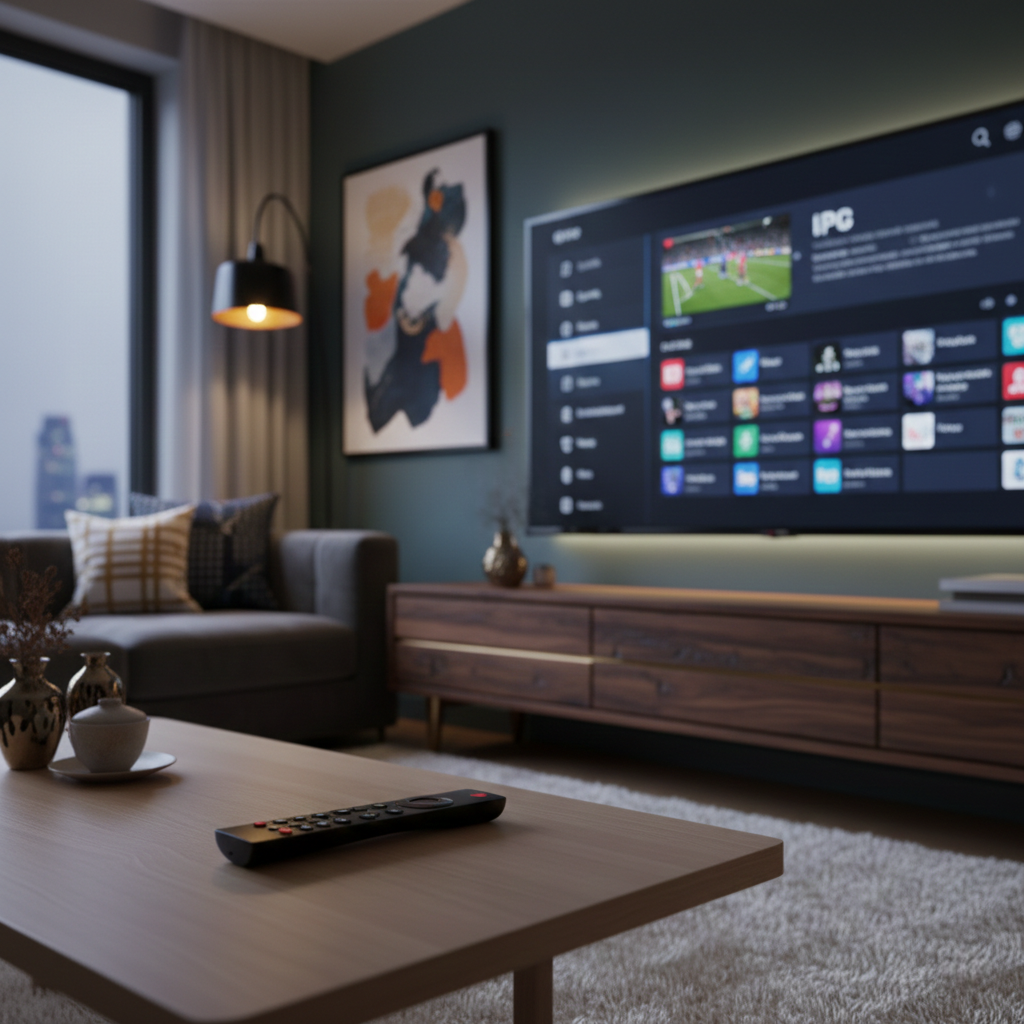
What UK users expect from the best IPTV UK service
UK users expect the best IPTV UK service to feel stable, simple, and genuinely usable — not like a “trial that never ends”. Most people are not searching for technical features or massive channel lists. They want live TV that loads quickly, stays smooth during peak evening hours, and includes the UK channels they actually watch. If the service can deliver that consistently on a Fire Stick or Smart TV, it already beats most low-quality IPTV services.
If you’re looking for a reliable IPTV Subscription UK with stable peak-time performance, explore our Premium UK IPTV service built specifically for British viewers.
Reliability is usually the first expectation, especially for live sport. A common UK scenario is someone sitting down to watch a match at 8pm, only to find buffering, frozen screens, or channels that disappear at the worst moment. That’s why “premium IPTV” matters: it’s not about hype, it’s about infrastructure that can handle busy times. Viewers also expect HD quality to remain consistent instead of dropping into blurry streams. In daily use, this is what separates a serious provider from a cheap deal that looks good on paper.
UK viewers also expect the service to be organised. A British IPTV setup should have clear UK categories (sports, entertainment, news, kids) and a working EPG so browsing feels normal, similar to traditional TV. Many IPTVuk services fail here by offering messy lists, duplicated channels, and unreliable programme guides. A good service makes it easy to find what you want quickly, which matters even more for non-technical users and families.
Finally, users expect a smooth experience across devices. People often start watching on the main TV, then switch to mobile or another room. The best uk iptv options work consistently across Fire Stick, Android TV, Smart TVs, and phones without constant re-logins or complicated settings. The visual above shows what most users want: a clean, modern IPTV interface that feels premium and easy. If you’re choosing a service, focus on performance, organisation, and support — because those three factors matter more than any headline claim.
Quick takeaway:
A premium experience is defined by consistency across devices, not marketing.
UK users want stability first, especially for live sports.
Organised UK categories and a working EPG matter more than huge channel numbers.
Live sports, entertainment, and full UK channel coverage
Stability during peak evening hours is one of the clearest signs of whether an IPTV service is genuinely high quality or just a cheap short-term option. In the United Kingdom, the busiest viewing window is usually between 7pm and 10pm, when families are home, streaming demand rises, and major live events are often on. Many IPTV services look fine in the morning or afternoon, but start buffering heavily in the evening. For most users, this is the moment where a service either proves itself or becomes unusable.
A typical real-world example is live sport. A stream may load perfectly at 2pm, but once the match starts and thousands of users connect at the same time, the channel begins freezing, dropping quality, or disconnecting. This isn’t always caused by your internet speed — it’s often the provider’s server capacity, routing, and stream management. That’s why premium IPTV services focus on infrastructure and stability, not just advertising big channel numbers. If your IPTVuk experience collapses at peak time, the rest of the features don’t matter.
To judge stability properly, test under realistic conditions. Don’t just open a channel and assume it’s fine. Watch for at least 20–30 minutes during peak hours, switch between channels quickly, and check whether HD quality stays consistent. If you’re using a Fire Stick or Smart TV, also pay attention to how fast channels load and whether the app stays responsive. Stability is not only “no buffering” — it’s also smooth navigation, consistent audio, and predictable performance when the service is under pressure.
If you do experience problems, it helps to know what’s provider-related and what’s home-related. Weak Wi-Fi in the living room, an overloaded router, or a crowded home network can also cause buffering. A simple test is to try a wired connection (or a stronger Wi-Fi setup) and see if performance improves. But if buffering happens mainly at 8pm and disappears late at night, that pattern strongly suggests the IPTV service is struggling under demand. The comparison overview above is designed to help you focus on this exact point, because peak-time stability is one of the most important criteria for choosing a reliable provider.
Quick takeaway:
Always test live channels during busy times before committing long term.
Many IPTV services fail during 7–10pm UK peak hours.
Stability depends heavily on provider infrastructure, not just your internet speed.
What “premium IPTV” actually means in daily use
Premium IPTV in daily use means the service feels calm, consistent, and predictable — not like a constant experiment. Most people don’t wake up excited about “features”. They just want live channels to load fast, streams to stay stable, and the interface to feel organised on their main device. In the UK, a premium IPTV experience is defined by what you don’t notice: no buffering during peak hours, no broken channels, and no endless searching through messy lists.
A real-world example is the evening routine. Someone comes home, turns on the TV, opens the IPTV app on a Fire Stick, and expects everything to work instantly. With low-quality IPTV services, this is often where problems begin: channels take ages to load, the EPG is wrong, and streams randomly drop quality. With a premium IPTV provider, the experience is closer to traditional TV: categories are clean, the UK channel list is consistent, and the stream quality stays stable even when demand is high. That’s what “premium” actually feels like — not flashy marketing, but smooth everyday use.
Premium also means usability across devices. UK viewers often watch on a Smart TV in the living room, then continue on mobile or another TV later. A good service should support this without constant re-login issues, confusing device limits, or unstable streams on certain platforms. It should also work well with widely used IPTV apps, so you’re not forced into a single outdated interface. For many households, this is what makes IPTV feel modern and convenient instead of frustrating.
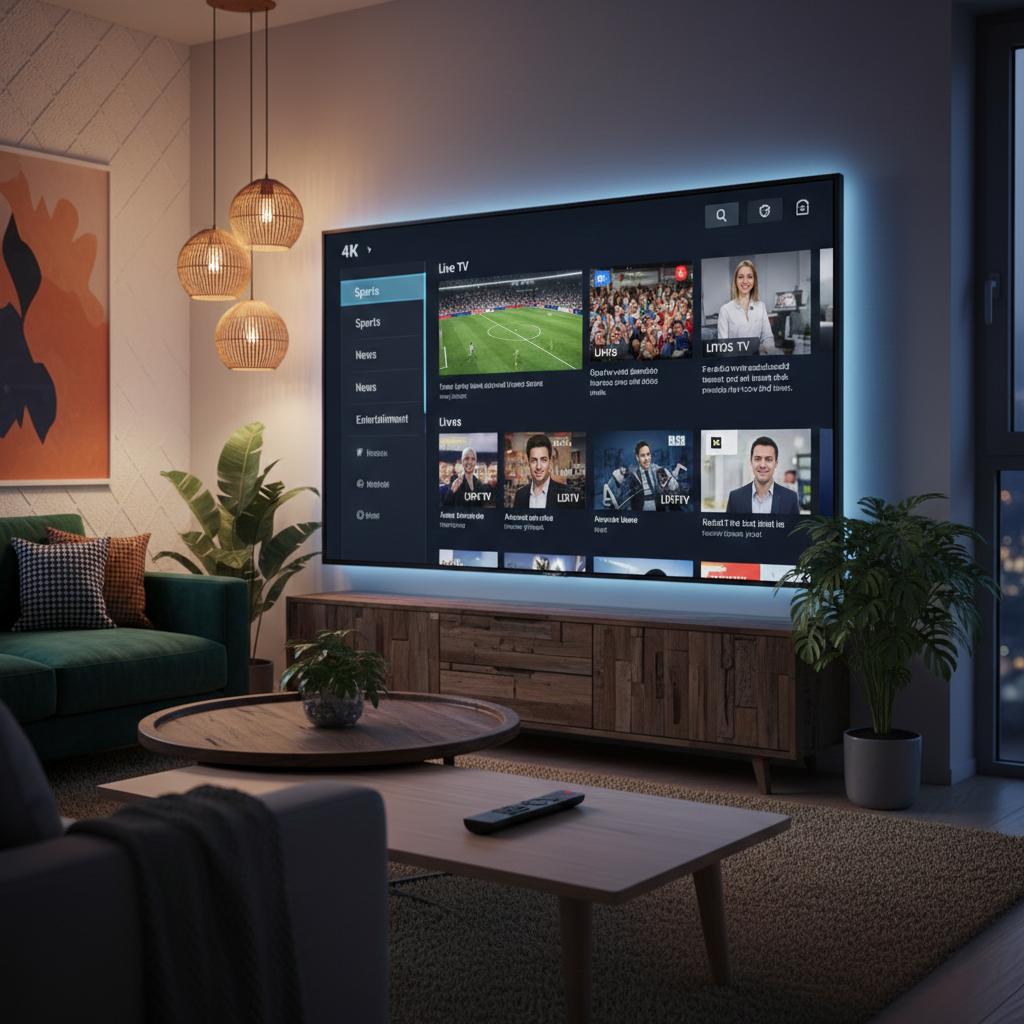
Finally, premium IPTV includes better service structure: clear subscription terms, realistic promises, and support that responds. If something goes wrong, a premium provider helps you solve it rather than ignoring messages or constantly changing links. The lifestyle visual above represents the ideal: a clean, modern IPTV setup that feels like a real product. When you judge IPTV services, focus on consistency, organisation, and support — because those are the daily-use signals that matter more than any channel count.
Quick takeaway:
Support and clear terms are part of the premium experience.
Premium IPTV is defined by stability and organisation, not huge channel numbers.
Daily use should feel smooth on Fire Stick, Smart TV, and mobile.
IPTV UK vs traditional TV and streaming apps
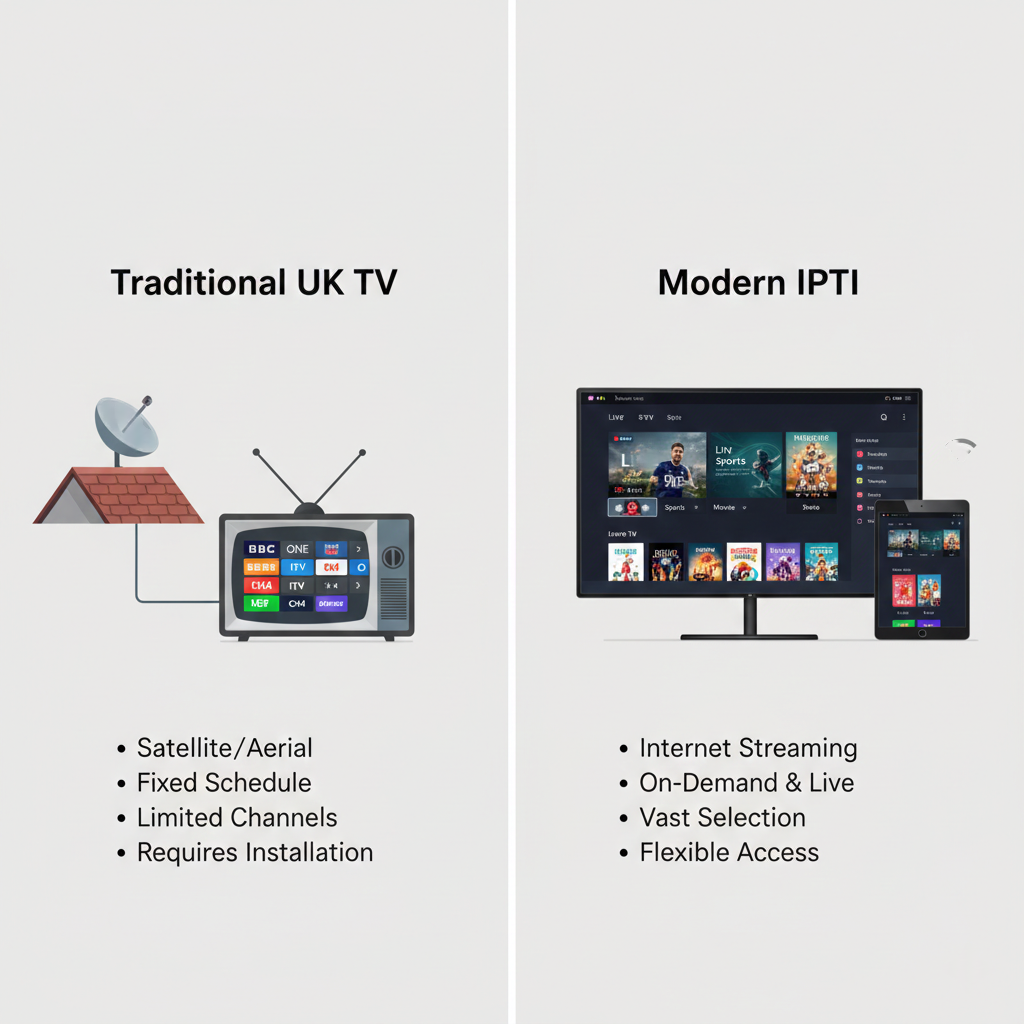
IPTV UK sits between traditional TV and modern streaming apps, offering a different type of viewing experience that many households now prefer. Traditional TV options like Freeview and satellite are stable and familiar, but they can feel limited if you want more flexibility or a wider selection. Streaming apps such as Netflix, Prime Video, and Disney+ are excellent for on-demand content, but they don’t fully replace live TV for people who still watch sports, news, and UK entertainment channels. IPTV services appeal because they bring live TV and on-demand content into one app-based system.
The main difference is how everything is delivered and managed. Traditional TV usually requires fixed hardware and a set service structure, while streaming apps require separate subscriptions for different platforms. IPTV in the UK is often chosen because it simplifies the experience: one app on a Fire Stick, Smart TV, Android TV, or phone can provide live channels, catch-up, and VOD. For many users, that “one place” convenience is the selling point. The comparison visual above reflects this shift clearly: traditional TV is stable but rigid, streaming apps are polished but fragmented, and IPTV aims to combine both.
A realistic example is the average UK household setup. Many people start with Freeview for basics, add paid sports, and then keep two or three streaming subscriptions for series and films. Over time, this becomes expensive and still feels scattered. IPTV services attract users who want a single, more streamlined system for live viewing. The trade-off is that IPTV quality depends heavily on the provider and your broadband stability. That’s why choosing a premium IPTV service matters — it’s the difference between smooth daily viewing and constant buffering during peak evening hours.
If you’re deciding which option fits you best, think about your habits. If you mainly watch films and series, mainstream streaming apps may already cover everything you need. If you watch live sport, news, or UK channels daily, IPTV can be a strong alternative — especially when you want multi-device access across the home. The best approach is to judge IPTV services based on stability, UK channel organisation, and support, not marketing claims. That way, you’re comparing real user experience rather than just comparing prices.
Quick takeaway:
IPTV works best when you want live channels + VOD in one app across devices.
Traditional TV is stable but less flexible and often costly for premium channels.
Streaming apps are great for on-demand, but don’t replace live TV for many UK viewers.
Differences between Freeview, satellite, and IPTV services
Freeview, satellite, and IPTV services all deliver television to UK viewers, but they do it in completely different ways — and that affects cost, flexibility, and daily experience. Freeview is the simplest option: it uses a TV aerial and provides a selection of UK channels without a monthly subscription. Satellite services usually offer wider coverage and premium channel bundles, but require a dish and often come with longer contracts. IPTV services deliver channels over the internet, which means they can be accessed through apps on Fire Stick, Smart TVs, Android TV, and mobile devices without installing external hardware.
Freeview works well for people who mainly watch basic UK channels and want something stable with minimal setup. The experience is familiar: you turn on the TV, browse the channel list, and everything loads quickly. The limitation is choice. Freeview does not include many premium sports or entertainment packages, and it does not offer the same flexibility for multi-device viewing. If you want more variety, you often end up combining Freeview with several streaming subscriptions, which can become costly over time.
Satellite services are usually the most traditional “premium” option. They can provide strong reliability and a structured channel guide, and they’re less affected by broadband issues. However, satellite often requires installation, hardware, and ongoing subscription bundles that can feel expensive. For many households, the biggest downside is lack of flexibility: you’re tied to a fixed setup in one home, and multi-room viewing can add extra cost. If your goal is simple live TV with premium sports in a stable format, satellite still has clear advantages.
IPTV services sit in the flexible middle. They allow users to watch live TV across devices, often with added features like catch-up, VOD, and a modern app interface. The trade-off is that IPTV depends on both the provider’s stability and your home internet quality. This is why premium IPTV providers focus on reliability during peak evening hours and clean UK channel organisation. The comparison visual above highlights these differences clearly, helping you choose based on how you watch rather than just what’s cheapest.
Quick takeaway:
IPTV offers multi-device convenience, but depends on provider quality and broadband stability.
Freeview is simple and stable, but limited in premium channel options.
Satellite is reliable and structured, but often expensive and less flexible.
Why many households switch to IPTV in the UK
Many households switch to IPTV in the UK because they want a more flexible way to watch live TV without paying for multiple expensive services. Traditional options can feel restrictive: Freeview is limited in premium content, while satellite packages often come with higher monthly costs and long-term commitments. IPTV services appeal because they offer live channels, on-demand libraries, and multi-device access in one app-based system. For many families, the goal is simple: fewer subscriptions, less hassle, and more choice.
A common UK scenario is a household that starts with Freeview for basic channels, then adds paid sports, and still keeps Netflix or Prime Video for films and series. Over time, the monthly cost rises and the viewing experience becomes fragmented across different apps and logins. IPTV can feel like a cleaner solution because it combines live viewing and extra content in one place. For non-technical users, the appeal is not the technology — it’s the convenience of turning on the TV and finding everything organised in one interface, as shown in the comparison visual above.
Another reason people switch is device freedom. Many viewers now watch TV on a Fire Stick, Smart TV, or mobile phone depending on where they are in the home. IPTV services fit this behaviour naturally because they are designed for app-based streaming. Instead of being tied to a single box or one TV, users can move between devices more easily. This matters for families where one person wants sports in the living room, another wants entertainment in the bedroom, and someone else wants to watch on mobile. A premium IPTV provider makes this feel smooth rather than complicated.
The final driver is value — but not just low price. People switch because they want more consistent access to the channels they actually watch, in a format that feels modern. The best uk iptv options are usually the ones that focus on stability, organised UK categories, and strong support. That’s why many households move away from traditional setups and towards IPTV services that match current viewing habits. If you’re considering switching, the smart approach is to choose based on reliability and usability, not exaggerated channel numbers.
Quick takeaway:
The best results come from premium providers focused on stability and organisation.
UK households switch to reduce cost and simplify multiple subscriptions.
IPTV fits modern device habits better than traditional TV setups.
How to choose the right IPTV subscription UK viewers can trust
To choose the right IPTV subscription UK viewers can trust, you need to focus on consistency, transparency, and real-world performance — not marketing claims. Many IPTV services promise thousands of channels and ultra-low prices, but trust is built on stability during peak hours, organised UK categories, and clear support. If a service works smoothly on your main device and behaves like a structured business, you’re already on the right track.
Start by testing reliability under realistic conditions. Open live channels in the evening, especially during busy hours, and watch for at least 20–30 minutes. Switch between sports, entertainment, and news channels to see how quickly streams load. A trustworthy IPTV subscription UK users rely on should not require constant refreshing or changing links. The EPG should match what’s actually on, and the channel list should feel organised rather than chaotic. These small checks tell you more than any feature list on a website.
Next, evaluate device compatibility and usability. Most households now use Fire Stick, Android TV, or Smart TVs, sometimes alongside mobile viewing. A good IPTV sub should integrate smoothly with common IPTV apps and provide clear setup guidance. If instructions are vague or depend on temporary contact methods, that’s a warning sign. Trust also means knowing how many devices are included, how renewals work, and whether the provider communicates clearly about changes or updates. Premium IPTV providers usually present this information upfront rather than hiding it in small print.
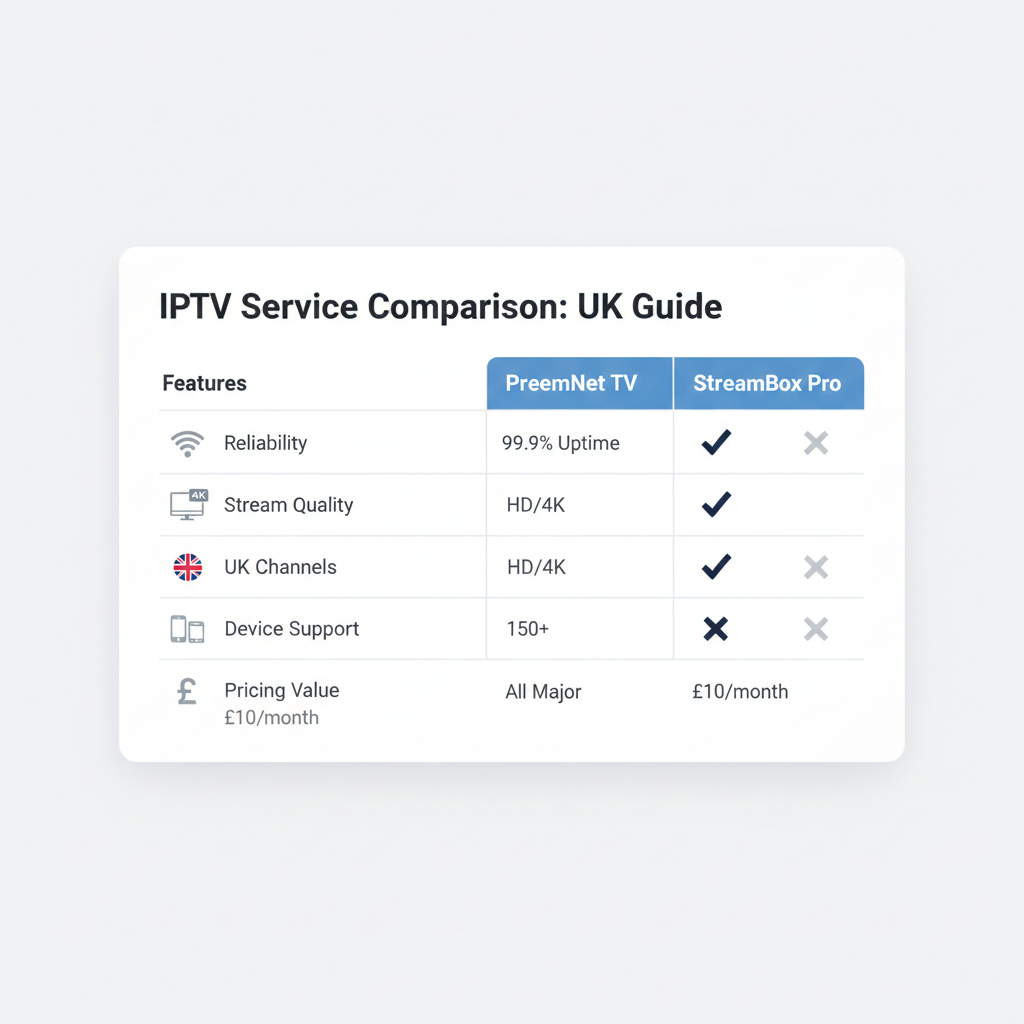
Finally, consider long-term value instead of just the first month’s cost. The best uk iptv option for you is the one that performs reliably week after week, not just during a short test. Look for structured support, realistic claims, and a service that feels stable rather than experimental. The comparison overview above helps you break down these criteria logically. When a provider consistently delivers smooth streams, organised UK coverage, and responsive help, that’s when trust becomes justified.
Quick checklist before choosing:
Responsive and professional support
Stable peak-time performance
Reliability, stream quality, and EPG accuracy
Reliability, stream quality, and EPG accuracy are the three features that decide whether an IPTV service feels premium or frustrating. Many providers talk about channel numbers, but UK viewers quickly realise that the real experience depends on stability, clear picture quality, and whether the programme guide actually matches what’s on. If any of these three areas are weak, the service becomes annoying to use, no matter how many channels it claims to offer.
Reliability is the foundation. A reliable IPTV service should load channels quickly, keep streams stable for long periods, and perform well during peak evening hours. In real use, reliability is tested when you switch channels fast, watch live sport, or leave a channel running for an hour. Lower-quality IPTV services often freeze, disconnect, or require frequent reloading. For families, this is especially frustrating because it turns a simple TV session into constant troubleshooting. A premium IPTV service should feel closer to traditional TV in terms of stability.
Stream quality is the next key factor, and it goes beyond “HD” labels. UK viewers now watch on large Smart TVs and Fire Stick devices where low bitrate streams look blurry and washed out. A strong service delivers consistent HD quality, stable audio, and smooth motion without sudden drops. Many IPTV services start in good quality, then degrade during busy times as servers become overloaded. If the picture becomes pixelated during live events, that’s usually a provider issue rather than your internet speed.
EPG accuracy is often overlooked until it becomes a problem. The EPG is what makes IPTV feel organised and easy to browse, especially for non-technical users. If programme listings don’t match channels, or if the guide fails to load, the service feels messy. A premium IPTV provider keeps UK categories clean, maintains accurate EPG data, and ensures the guide loads quickly. The comparison overview above highlights these features because they are the most practical indicators of quality. If you’re evaluating IPTV services, test these three areas first — they reveal the true standard of the provider.
Quick takeaway:
- Reliability matters most: stable streams and fast channel loading.
- Stream quality should stay consistent, especially during peak hours.
- A working EPG makes IPTV feel organised and easy to use.
Device compatibility: Fire Stick, Smart TV, Android, mobile
Device compatibility is one of the most important practical factors when choosing an IPTV service in the UK. Even the best IPTV UK option will feel frustrating if it doesn’t work smoothly on the devices you already use. Most households now rely on Fire Stick, Smart TVs, Android TV boxes, and mobile phones for daily viewing. A strong service should support these devices clearly and consistently, without complicated setup steps or hidden limitations.
Fire Stick is often the most reliable and user-friendly option. It’s affordable, widely used across the United Kingdom, and works well with popular IPTV apps. Many viewers prefer it because it provides a smoother interface than older Smart TV systems and receives regular updates. In daily use, this means faster channel switching, more stable playback, and fewer app crashes. If you want the simplest experience, Fire Stick combined with a well-structured IPTV service is usually the safest route.
Smart TV compatibility can be more unpredictable. Some newer models handle IPTV apps well, while others struggle with limited app stores or slower processors. A common scenario is someone installing an IPTV app directly on their TV, only to find the interface lagging or streams freezing under load. In these cases, adding an external device such as a Fire Stick or Android TV box often improves performance significantly. A premium IPTV provider will usually explain which devices offer the best experience rather than claiming universal compatibility.
Mobile and Android viewing is now part of normal habits. People in the UK frequently watch live channels or catch up on shows while travelling or in different rooms. A reliable IPTV service should adapt to smaller screens, handle Wi-Fi and mobile data efficiently, and allow smooth login across devices within the subscription limits. Before starting your IPTV sub, always confirm how many devices are allowed and whether switching between them is straightforward. True device compatibility means flexibility without confusion.
Quick takeaway:
Mobile compatibility and clear device limits are essential for daily use.
Fire Stick is often the most stable and user-friendly IPTV setup.
Smart TV performance varies, and external devices can improve stability.
Pricing vs real value in a premium IPTV deal
Pricing is important, but real value in a premium IPTV deal comes from stability, usability, and long-term consistency. Many UK users start by looking for the cheapest option, only to discover that low-cost IPTV services often fail at the exact moments that matter most — peak evening hours, major sports events, or family viewing time. A premium IPTV service may cost slightly more, but it usually delivers smoother streams, cleaner organisation, and support that actually responds when something breaks.
A common example is the “too good to be true” deal: huge channel numbers, every premium sports package, and massive VOD libraries for an unusually low monthly fee. In practice, these services often suffer from buffering, unreliable EPG data, or constant channel replacements. The hidden cost is time and frustration. If you have to restart streams, switch channels repeatedly, or message support every week, the cheap price stops feeling like a bargain. Premium IPTV providers focus less on inflated marketing and more on delivering stable UK channels and consistent performance.
Real value also includes service structure. A premium provider usually offers clear subscription terms, device limits, and renewal options. It should be easy to understand what you’re paying for and how to continue or upgrade later. Many IPTV services create confusion here by hiding important details or changing rules without warning. For UK households, transparency is part of value, because it reduces risk and makes the service feel more like a legitimate subscription rather than a temporary link.
If you want to compare pricing properly, think in terms of daily experience. Does the service load quickly on Fire Stick and Smart TV? Is the stream quality consistently HD? Does it stay stable between 7pm and 10pm? The comparison overview above helps you judge these points clearly. In the end, the best IPTV UK option is rarely the lowest price — it’s the one that works reliably without constant troubleshooting.
Quick takeaway:
Judge pricing by daily performance, not channel numbers.
Cheap IPTV often costs more in frustration and downtime.
Premium value is stability, clear terms, and consistent HD quality.
Why iptvukvip is considered one of the best UK IPTV options
iptvukvip is considered one of the best UK IPTV options because it focuses on the areas that matter most to everyday viewers: stability, organised UK channel coverage, and clear service structure. Instead of relying on exaggerated channel numbers or unrealistic promises, it positions itself around consistent performance and ease of use. For many users in the United Kingdom, that practical reliability is what defines a strong IPTV experience.
In daily use, the difference becomes clear during peak evening hours. Viewers expect live sports, entertainment, and news to stream smoothly without constant buffering or sudden quality drops. A premium IPTV provider builds its reputation on stable streams and a properly maintained EPG that reflects real programme schedules. When channels are grouped logically and navigation feels clean on Fire Stick or Smart TV, the service feels closer to traditional TV — but with the flexibility of modern app-based viewing.
Another reason iptvukvip stands out is device compatibility and simplicity. Most households now use Fire Stick, Android TV, Smart TVs, or mobile devices, often switching between them. A reliable IPTV subscription UK users can trust should support these setups without confusing instructions or constant reconfiguration. Clear subscription terms, transparent device limits, and structured support all contribute to that sense of trust. Instead of chasing flashy marketing, the focus is on delivering a stable British IPTV experience that works consistently.
If you compare IPTV services carefully, you’ll notice that long-term satisfaction usually depends on infrastructure, organisation, and support rather than price alone. The comparison overview above highlights these criteria because they reflect real-world usage, not theory. For viewers who want a balanced mix of UK channels, steady HD quality, and a service that behaves professionally, iptvukvip is often seen as one of the more dependable options in the market.
Quick takeaway:
Transparent terms and structured support build long-term trust.
Stability and organised UK channels define a premium experience.
Clean navigation and accurate EPG improve daily usability.
Key features and structured service approach
A structured IPTV service approach means the provider focuses on delivering a consistent viewing experience, not just selling access. In the UK market, many IPTV services feel random: unclear plans, messy channel lists, and support that disappears when problems happen. A premium IPTV provider stands out by offering clear subscription options, organised UK categories, and stable performance that stays consistent over time. For most viewers, that structure is what turns IPTV from “something to try” into a service they actually rely on.
One key feature of a structured service is reliability backed by proper organisation. Instead of duplicated channels and confusing naming, a well-managed provider keeps UK entertainment, sports, news, and kids sections easy to browse. The EPG should load properly and match what’s actually playing, so the service feels natural for non-technical users. This matters most on Fire Stick and Smart TV setups, where viewers expect fast navigation and minimal loading delays. A clean channel layout also reduces the frustration that often pushes people away from lower-quality IPTV services.
Another important feature is cross-device consistency. UK viewers often watch on a main TV, then switch to mobile or another room. A structured IPTV service supports this behaviour with clear device rules, stable streams across platforms, and simple setup steps. It should work smoothly with widely used IPTV apps rather than forcing users into outdated or confusing interfaces. For many households, this is the difference between a service that feels premium and one that feels like constant trial and error.
Finally, structured support is part of the product. The best IPTV services behave like long-term providers: they communicate clearly, respond quickly, and help users solve issues instead of sending vague replies. When you combine stability, organisation, and support, the result is a premium IPTV experience that feels predictable and easy. The comparison overview above reflects these exact factors because they are the real indicators of quality. If you’re choosing between IPTV services, a structured approach is one of the strongest signals that the provider is built for long-term users.
Quick takeaway:
- Structure means organised channels, clear plans, and consistent performance.
- Cross-device usability matters as much as channel quality.
- Support and transparency are part of a premium IPTV experience.
What to check before starting your IPTV sub
Before starting your IPTV sub, you should check a few practical points that directly affect whether the service will feel smooth or frustrating in daily use. Many people focus on pricing or channel numbers, but the smarter approach is to confirm performance, device compatibility, and service transparency first. If these basics are strong, you’re far more likely to have a stable, premium experience instead of dealing with buffering, messy channel lists, or unclear subscription rules.
Start with your devices and your home internet setup. If you plan to watch mainly on Fire Stick or Android TV, confirm the service works well with common IPTV apps and that setup instructions are clear. If you want to use a Smart TV app, be realistic: Smart TV performance varies a lot by brand and model. It’s also worth checking your Wi-Fi quality in the room where you watch most. Many streaming issues come from weak Wi-Fi or overloaded home networks, not the provider itself. A simple test is to stream a live channel during peak evening hours and see if it stays stable for at least 20–30 minutes.
Next, check the channel structure and EPG quality. A reliable IPTV service should offer clean UK categories and a programme guide that loads quickly and matches what’s actually on. This matters more than people expect, because it determines whether browsing feels easy or chaotic. If channels are duplicated, constantly renamed, or missing schedule data, the service will feel messy even if the streams work. If you watch sports, test a sports channel during busy periods. If you watch family content, check kids’ channels and entertainment categories. These small checks reveal the true quality of the provider.
Finally, confirm the subscription terms and support before paying. Check device limits, renewal options, and what happens if you change devices later. A premium IPTV provider should answer basic questions clearly and respond quickly. If support avoids simple questions or only communicates through unreliable channels, treat that as a warning sign. In the UK market, the best long-term experience usually comes from providers that prioritise stability, organisation, and support over exaggerated promises. If you check these points upfront, you avoid most of the common problems that cause users to switch providers repeatedly.
Quick takeaway:
Confirm device limits, renewal terms, and support response before paying.
Test stability at peak time before committing long term.
Check UK channel organisation and whether the EPG actually works.